|
The following
comes from the Vitae Patrum (Life of the Fathers), compiled, in Latin,
in 1628 by Heribert Rosweyde, S.J., from sources dating to the third
and fourth centuries.
In entering the
nearest part of the desert I had as guide one of the brothers who knew
the area well. We came to an old monk, living at the foot of a
mountain, who had a well, a most rare thing in these parts. He had an
ox whose sole task was to turn a wheel which drew the water up. The
well was reputed to be a thousand feet deep or more. There was a garden
with many vegetables of various different kinds, contrary to what one
would expect in a desert where the soil is dry, burned up by the heat
of the sun, incapable of sustaining the smallest seed or root. By the
ingenuity of this holy man and the labour of both him and his ox, they
were able to irrigate the sand regularly, providing sufficient
fertility for the vegetables that we could see growing and coming to
maturity so wonderfully in that garden. The ox and his master both
lived off them, and the holy man was able to provide us with a meal
from his plentiful store.
After the meal, as it drew towards evening, he took us to a palm tree
about two miles away the fruits of which he often gathered. This is the
only sort of tree which grows in the desert, albeit rarely. Whether
wise people of old planted them, or whether the soil produces them
naturally, I know not, unless God in his providence prepared them for
his servants against the time when the desert should be inhabited. For
those who settle in these lonely places live off the fruit of these
trees for the most part, since nothing else will grow there.
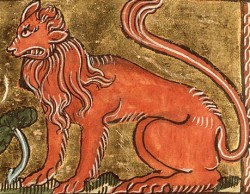
As we approached the tree towards which our host was leading us we
suddenly came upon a lion. My guide and I were terrified, but the holy
man went up to it quite casually. We followed, though still frightened.
At his command the beast stopped and sat down, while he picked some of
the fruit within easy reach on the lower branches. When his hands were
full the beast came up to him and accepted fruit from him as easily as
any domestic animal, and having eaten, departed. As we watched, still
trembling, we were not quite sure which was the greater, the virtue of
faith in this man, or our own weakness.
|
|