|
Matthew 13:31-35
Another parable
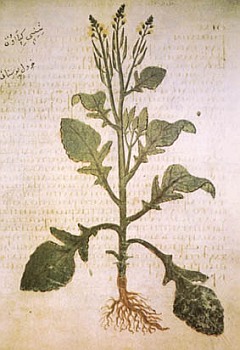
he proposed unto them, saying: The kingdom of heaven is like to a grain
of mustard seed, which a man took and sowed in his field. Which is the
least indeed of all seeds; but when it is grown up, it is greater than
all herbs, and becometh a tree, so that the birds of the air come, and
dwell in the branches thereof.
Another parable he spoke to them: The kingdom of heaven is like to
leaven, which a woman took and hid in three measures of meal, until the
whole was leavened. All these things Jesus spoke in parables to the
multitudes: and without parables he did not speak to them. That it
might be fulfilled which was spoken by the prophet, saying: I will open
my mouth in parables, I will utter things hidden from the foundation of
the world.
Mark 4:30-34
And he said: To
what shall we liken the kingdom of God? or to what parable shall we
compare it? It is as a grain of mustard seed: which when it is sown in
the earth, is less than all the seeds that are in the earth: And when
it is sown, it groweth up, and becometh greater than all herbs, and
shooteth out great branches, so that the birds of the air may dwell
under the shadow thereof. And with many such parables, he spoke to them
the word, according as they were able to hear. And without parable he
did not speak unto them; but apart, he explained all things to his
disciples.
Luke 13:18-21
He said
therefore: To what is the kingdom of God like, and whereunto shall I
resemble it? It is like to a grain of mustard seed, which a man took
and cast into his garden, and it grew and became a great tree, and the
birds of the air lodged in the branches thereof.
And again he said: Whereunto shall I esteem the kingdom of God to be
like? It is like to leaven, which a woman took and hid in three
measures of meal, till the whole was leavened.
Commentary
By St. Augustine
"The three
measures of meal" of which the Lord spake, is the human race. Recollect
the deluge; three only remained, from whom the rest were to be
re-peopled. Noe had three sons, by them was repaired the human race.
That holy "woman who hid the leaven," is Wisdom.
Lo, the whole world crieth out in the Church of God, "I know that the
Lord is great." Yet doubtless there are but few who are saved. Ye
remember a question which was lately set before us out of the Gospel,
"Lord," it was said, "are there few that be saved?"
What said the Lord to this? He did not say, "Not few, but many are they
who are saved." He did not say this. But what said He, when He had
heard, "Are there few that be saved? Strive to enter by the strait
gate." When thou hearest then, "Are there few that be saved?" the Lord
confirmed what He heard. Through the "strait gate" but "few" can
"enter."
In another place He saith Himself, "Strait and narrow is the way which
leadeth unto life, and few there be that go thereby: but broad and
spacious is the way that leadeth to destruction, and many there be
which walk thereby." Why rejoice we in great numbers? Give ear to me,
ye "few." I know that ye are "many," who hear me, yet but "few" of you
hear to obey. I see the floor, I look for the corn. And hardly is the
corn seen, when the floor is being threshed; but the time is coming,
that it shall be winnowed. But few then are saved m comparison of the
many that shall perish. For these same "few" will constitute in
themselves a great mass. When the Winnower shall come with His fan in
His Hand, "He will cleanse His floor, and lay up the wheat into the
garner; but the chaff He will burn with unquenchable fire." Let not the
chaff scoff at the wheat; in this He speaketh truth, and deceiveth no
one. Be ye then in yourselves among many a many, few though ye be in
comparison of a certain many. So large a mass is to come out of this
floor, as to fill the garner of heaven. For the Lord Christ would not
contradict Himself, who hath said, "Many there are who enter in by the
narrow gate, many who go to ruin through the wide gate;" contradict
Himself, who hath in another place said, "Many shall come from the East
and West." "Many" then are the "few;" both "few" and "many." Are the
"few" one sort, and the "many" another? No. But the "few" are
themselves the "many;" "few" in comparison of the lost, "many in the
society of the Angels. Hearken, dearly Beloved.
The Apocalypse hath this written; "After this I beheld of all
languages, and nations, and tribes, a great multitude, which no man can
number, coming with white robes and palms." This is the mass of the
saints. With how much clearer voice will the floor say, when it has
been fanned, separated from the crowd of ungodly, and evil, and false
Christians, when those who "press" and do not "touch" (for a certain
woman in the Gospel "touched," the crowd "pressed" Christ), shall have
been severed unto everlasting fire; when all they then, who are to be
damned shall have been separated off, with how great assurance will the
purified mass, standing at the Right Hand, fearing now for itself the
admixture of no evil men, nor the loss of any of the good, now about to
reign with Christ, say, "I know that the Lord is great"!
Commentary
By St. John Chryostom
"Another
parable put He forth unto them, saying, The Kingdom of Heaven is like
to a grain of mustard seed."
That is, since He had said, that of the crop three parts are lost, and
but one saved, and in the very part again which is saved so great
damage ensues; lest they should say, "And who, and how many will be the
faithful?" this fear again He removes, by the parable of the mustard
seed leading them on to belief, and signifying that in any case the
gospel shall be spread abroad.
Therefore He brought forward the similitude of this herb, which has a
very strong resemblance to the subject in hand; "Which indeed is the
least," He saith, "of all seeds, but when it is grown, it is the
greatest among herbs, and becometh a tree, so that the birds of the air
come and lodge in the branches thereof."
Thus He meant to set forth the most decisive sign of its greatness.
"Even so then shall it be with respect to the gospel too," saith He.
Yea, for His disciples were weakest of all, and least of all; but
nevertheless, because of the great power that was in them, It hath been
unfoldedin every part of the world.
After this He adds the leaven to this similitude, saying,
"The Kingdom of Heaven is like unto leaven, which a woman took, and hid
in three measures ofmeal, until the whole was leavened."
For as this converts the large quantity of meal into its own quality,
even so shall ye convert the whole world.
And see His wisdom, in that He brings in things natural, implying that
as the one cannot fail to take place, so neither the other. For say not
this to me: "What shall we be able to do, twelve men, throwing
ourselves upon so vast a multitude?" Nay, for this very thing most of
all makes your might conspicuous, that ye mix with the multitude and
are not put to flight. As therefore the leaven then leavens the lump
when it comes close to the meal, and not simply close, but so as to be
actually mixed with it (for He said not, "put," simply, but "hid"); so
also ye, when ye cleave to your enemies, and are made one with them,
then shall ye get the better of them. And as the leaven, though it be
buried, yet is not destroyed, but by little and little transmutes all
into its own condition; of like sort will the event be here also, with
respect to the gospel. Fear ye not then, because I said there would be
much injurious dealing: for even so shall ye shine forth, and get the
better of all.
But by "three measures," here, He meant many. for He is wont to take
this number for a multitude.
And marvel not, if discoursing about the kingdom, He made mention of a
little seed and of leaven; for He was discoursing with men
inexperienced and ignorant, and such as needed to be led on by those
means. For so simple were they, that even after all this, they required
a good deal of explanation.
Where now are the children of the Greeks? Let them learn Christ's
power, seeing the verity of His deeds, and on either ground let them
adore Him, that He both foretold so great a thing, and fulfilled it.
Yea, for it is He that put the power into the leaven. With this intent
He mingled also with the multitude those who believe on Him, that we
might impart unto the rest of our wisdom. Let no one therefore reprove
us for being few. For great is the power of the gospel, and that which
hath been once leavened, becomes leaven again for what remains. And as
a spark, when it hath caught in timber, makes what hath been burnt up
already increase the flame, and so proceeds to the rest; even so the
gospel likewise. But He said not fire, but "leaven." Why might this be?
Because in that case the whole effect is not of the fire, but partly of
the timber too that is kindled, but in this the leaven doth the whole
work by itself.
Now if twelve men leavened the whole world, imagine how great our
baseness, in that when we being so many are not able to amend them that
remain; we, who ought to be enough for ten thousand worlds, and to
become leaven to them. "But they," one may say, "were apostles." And
what then? Were they not partakers with thee? Were they not brought up
in cities? Did they not enjoy the same benefits? Did they not practise
trades? What, were they angels? What, came they down from Heaven.?
"But they had signs," it will be said. It was not the signs that made
them admirable. How long shall we use those miracles as cloaks for our
own remissness? Behold the choir of the Saints, that they shone not by
those miracles.Why, many who had actually cast out devils, because they
wrought iniquity, instead of being admired, did even incur punishment.
And what can it be then, he will say, that showed them great? Their
contempt of wealth, their despising glory, their freedom from worldly
things. Since surely, had they wanted these qualities, and been slaves
of their passions, though they had raised ten thousand dead, so far
from doing any good, they would even have been accounted deceivers.
Thus it is their life, so bright on all sides, which also draws down
the grace of the Spirit.
What manner of miracle did John work, that he fixed on himself the
attentionof so many cities? For as to the fact that he did no wondrous
works, hear the evangelist, saying, "John did no miracle."And whence
did Elias become admirable? Was it not from his boldness towards the
king? from his zeal towards God? from his voluntary poverty? from his
garment of sheep's skin, and his cave, and his mountains? For his
miracles He did after all these. And as to Job, what manner of miracle
did he work in sight of the devil, that he was amazed at him? No
miracle indeed, but a life that shone and displayed an endurance firmer
than any adamant. What manner of miracle did David, yet being young,
that God should say, "I have found David the son of Jesse, a man after
mine own heart?"And Abraham, and Isaac, and Jacob, what dead body did
they raise? what leper did they cleanse? Knowest thou not that the
miracles, except we be sober, do even harm in many cases? Thus many of
the Corinthians were severed one from another; thus many of the Romans
were carried away with pride; thus was Simon cast out. Thus he, who at
a certain time had a desire to follow Christ, was rejected, when he had
been told, "The foxes have holes, and the birds of the air nests."For
each of these, one aiming at the wealth, another at the glory, which
the miracles bring, fell away and perished. But care of practice, and
love of virtue, so far from generating such a desire, doth even take it
away when it exists.
And Himself too, when He was making laws for His own disciples, what
said He? "Do miracles, that men may see you"? By no means. But what?
"Let your light shine before men, that they may see your good works,
and glorify your Father which is in Heaven."And to Peter again He said
not, "If thou lovest me," "do miracles," but "feed my sheep."And
whereas He everywhere distinguishes him with James and John above all
the rest, for what, I pray thee, did He distinguish them? For their
miracles? Nay, all alike cleansed the lepers, and raised the dead; and
to all alike He gave that authority.
Whence then had these the advantage? From the virtue in their soul.
Seest thou how everywhere practice is required, and the proof by works?
"For by their fruits," saith He, "ye shall know them." And what
commends our own life? Is it indeed a display of miracles, or the
perfection of an excellent conversation? Very evidently it is the
second; but as to the miracles, they both have their origin from hence,
and terminate herein. For both He that shows forth an excellent life,
draws to Himself this gift, and he that receives the gift, receives it
for this end, that he may amend other men's lives. Since even Christ
for this end wrought those miracles, that having made Himself thereby
credible, and drawn men unto Him, He might bring virtue into our life.
Wherefore also He lays more stress of the two on this. For He is not at
all satisfied with the signs only, but He also threatens hell, and
promises a kingdom, and lays down those startling laws, and all things
He orders to this end, that He may make us equal to the angels.
And why say I, that Christ doth all for this object? Why, even thou,
should one give thee thy choice, to raise dead men by His name, or to
die for His name; which I pray thee, of the two wouldest thou rather
accept? Is it not quite plain, the latter? and yet the one is a
miracle, the other but a work. And what, if one offered thee to make
grass gold, or to be able to despise all wealth as grass, wouldest thou
not rather accept this latter? and very reasonably. For mankind would
be attracted by this more than any way. For if they saw the grass
changed into gold, they would covet themselves also to acquire that
power, as Simon did, and the love of money would be increased in them;
but if they saw us all contemning and neglecting gold, as though it
were grass, they would long ago have been delivered from this disease.
Seest thou that our practice has more power to do good? By practice I
mean, not thy fasting, nor yet thy strewing sackcloth and ashes under
thee, but if thou despise wealth, as it ought to be despised; if thou
be kindly affectioned, if thou give thy bread to the hungry, if thou
control anger, if thou cast out vainglory, if thou put away envy. So He
Himself used to teach: for, "Learn of me," saith He, "for I am meek and
lowly in heart."He did not say, "for I fasted," although surely He
might have spoken of the forty days, yet He saith not this; but, "I am
meek and lowly in heart." And again, when sending them out, He said
not, "Fast," but, "Eat of all that is set before you."With regard to
wealth, however, He required of them great strictness, saying, "Provide
not gold, or silver, or brass, in your purses."
And all this I say, not to depreciate fasting, God forbid, but rather
highly to commend it. But I grieve when other duties being neglected,
ye think it enough for salvation, having but the last place in the
choir of virtue. For the greatest thing is charity, and moderation, and
almsgiving; which hits a higher mark even than virginity.
Wherefore, if thou desire to become equal to the apostles, there is
nothing to hinder thee. For to have arrived at this virtue only
suffices for thy not at all falling short of them. Let no one therefore
wait for miracles.For though the evil spirit is grieved, when he is
driven out of a body, yet much more so, when he sees a soul delivered
from sin. For indeed this is his great power.This power caused Christ
to die, that He might put an end to it. Yea, for this brought in death;
by reason of this all things have been turned upside down. If then thou
remove this, thou hast cut out the nerves of the devil, thou hast
"bruised his head," thou hast put an end to all his might, thou hast
scattered his host, thou hast exhibited a sign greater than all signs.
The saying is not mine, but the blessed Paul's. For when he had said,
"Covet earnestly the best gifts, and yet show I unto you a more
excellent way;"he did not speak next of a sign, but of charity, the
root of all our good things. If then we practise this, and all the
self-denial that flows from it. we shall have no need of signs; even as
on the other hand, if we do not practise it, we shall gain nothing by
the signs.
Bearing in mind then all this, let us imitate those things whereby the
apostles became great. And whereby did they become great? Hear Peter,
saying, "Behold we have forsaken all. and followed Thee; what shall we
have therefore?"Hear also Christ saying to them, Ye shall sit upon
twelve thrones," and, "every one that hath forsaken houses, or
brethren, or father, or mother, shall receive an hundredfold in this
world, and shall inherit everlasting life."From all worldly things,
therefore, let us withdraw ourselves, and dedicate ourselves to Christ,
that we may both be made equal to the apostles according to His
declaration, and may enjoy eternal life; unto which may we all attain,
by the grace and love towards man of our Lord Jesus Christ to whom be
glory and might forever and ever. Amen.
|
|