|
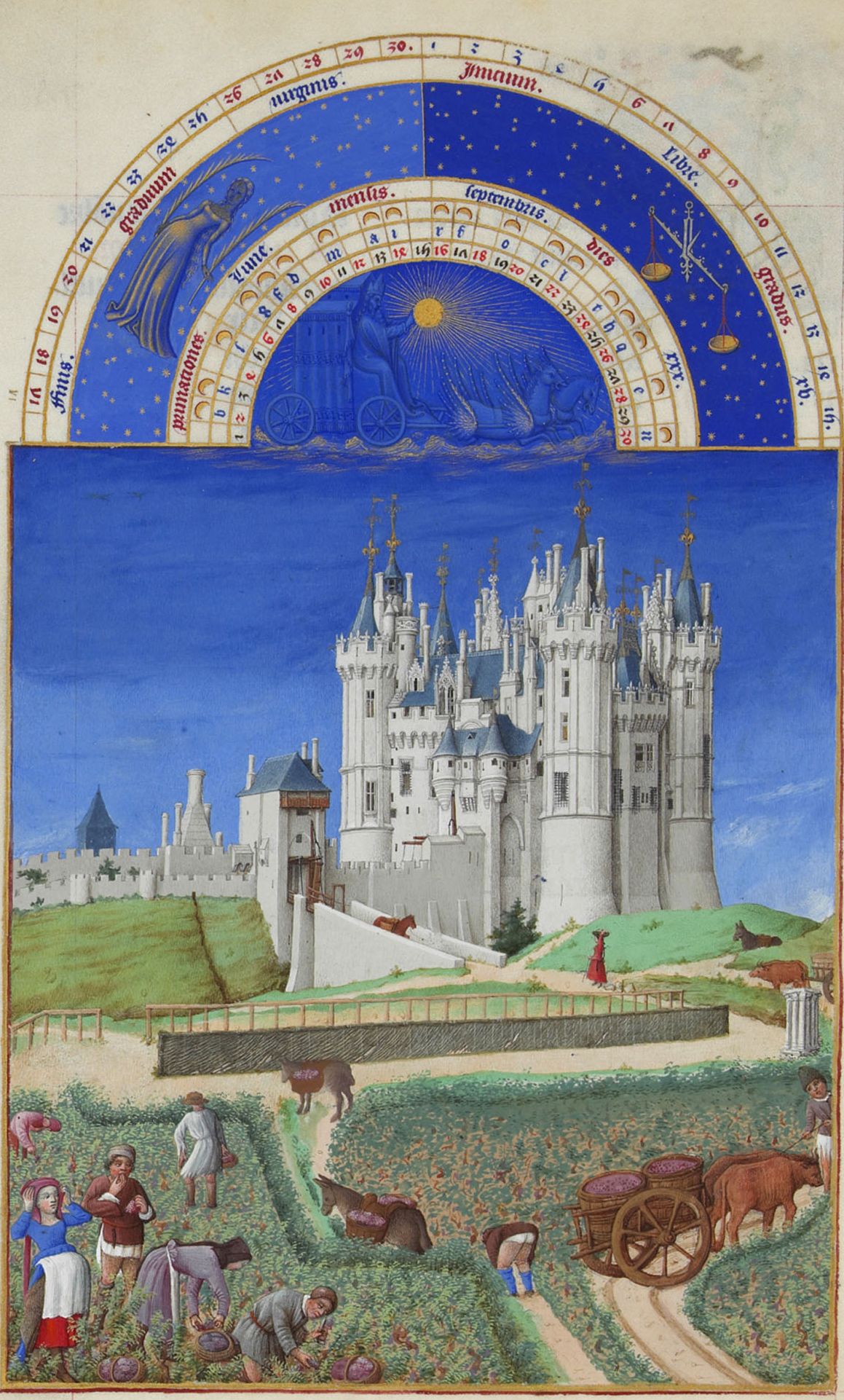
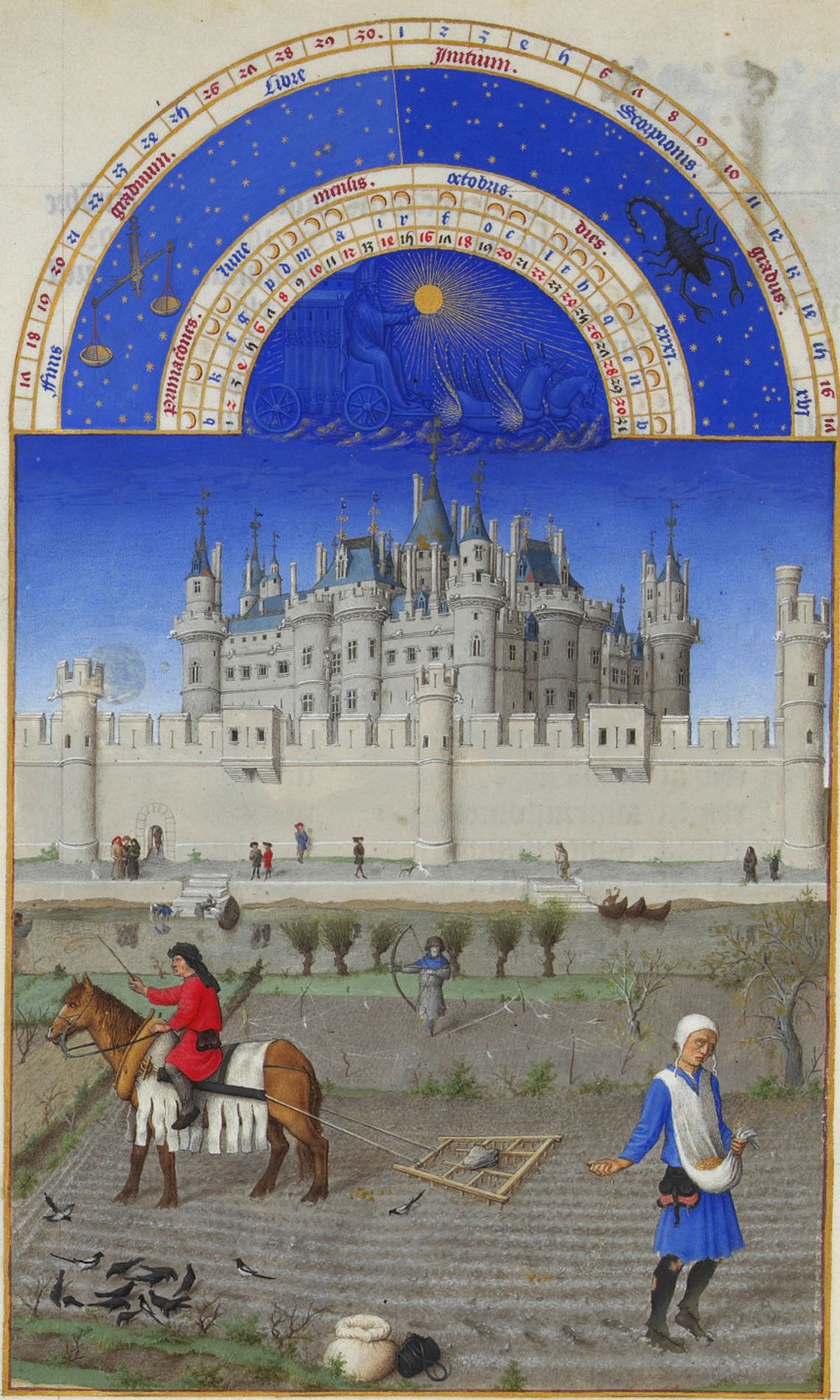
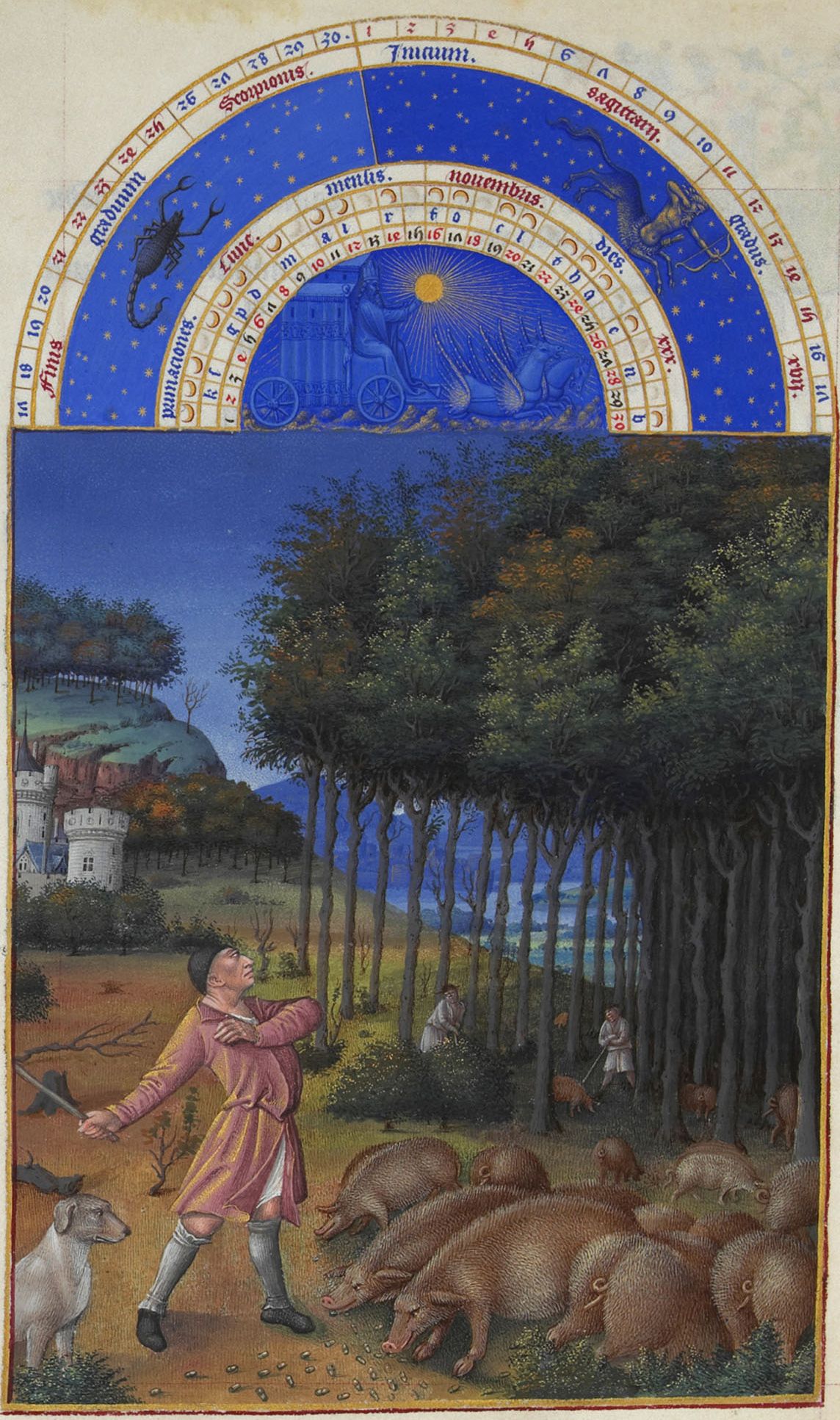
Wednesday, Friday, and Saturday after the the Feast of the Exaltation
of the Holy Cross, 14 September, 1
are known as "Michaelmas Embertide," and they come near the beginning
of Autumn (September, October, November). The Lessons focus on the Old
Covenant's Day of Atonement and the fast of the seventh month, but
start off with this prophecy from Amos 9:13-15:
Behold the days
come, when the ploughman shall overtake the reaper, and the treader of
grapes him that soweth seed, and the mountains shall dop sweetness, and
every hill shall be tilled. And I will bring back the captivity of My
people Israel, and they shall build the abandoned cities, and inhabit
them; and they shall plant vineyards, and drink the wine of them; and
shall make gardens and eat the fruits of them; and I will plant them
upon their land: and I will no more pluck them out of their land which
I have given them; saith the Lord thy God.
Like all
Embertides but Whit Embertide, the Lessons end with the story of the
three boys in the fiery furnace, as told by Daniel.
The Gospel readings recount how Jesus exorcised demons from a possessed
boy and tells the disciples about fasting to cast out unclean spirits
(Matthew 9:16-28), forgave Mary
Magdalen (Luke 7:36-50), and healed the woman on the sabbath after
telling the parable of the fig tree (Luke
13:6-17).
The Natural Season
Psalm 144:15-16
"The eyes of all hope in thee, O Lord:
and thou givest them meat in due season.
Thou openest thy hand,
and fillest with blessing every living creature."
Oh, delicious
Autumn! Trees lavish with spice colors... the earthy smell of their
leaves burning in hypnotic flames... the rich colors of grapes, apples,
pumpkin, and squash, of gold and scarlet flowers... the invigorating
air inviting warm sweaters... The season is marked by a bounty that
lends itself well to some wonderful holidays, especially Martinmas and the secular
American and Canadian Thanksgivings (the fourth Thursday in November
and October 2, respectively). This delightful poem, written in an old
Hoosier dialect by James Whitcomb Riley (October 7, 1849 - July 22,
1916), conveys the feeling of Autumn so well:
When the
Frost is on the Pumpkin
When the frost is on the punkin and the fodder's in the shock,
And you hear the kyouck and gobble of the struttin' turkey-cock,
And the clackin' of the guineys, and the cluckin' of the hens,
And the rooster's hallylooyer as he tiptoes on the fence;
O, it's then's the times a feller is a-feelin' at his best,
With the risin' sun to greet him from a night of peaceful rest,
As he leaves the house, bare-headed, and goes out to feed the stock,
When the frost is on the punkin and the fodder's in the shock.
They's something kindo' harty-like about the atmusfere
When the heat of summer's over and the coolin' fall is here
Of course we miss the flowers, and the blossums on the trees,
And the mumble of the hummin'-birds and buzzin' of the bees;
But the air's so appetizin'; and the landscape through the haze
Of a crisp and sunny morning of the airly autumn days
Is a pitcur' that no painter has the colorin' to mock
When the frost is on the punkin and the fodder's in the shock.
The husky, rusty russel of the tossels of the corn,
And the raspin' of the tangled leaves, as golden as the morn;
The stubble in the furries --kindo' lonesome-like, but still
A-preachin' sermuns to us of the barns they growed to fill;
The strawstack in the medder, and the reaper in the shed;
The hosses in theyr stalls below -- the clover overhead!
O, it sets my hart a-clickin' like the tickin' of a clock,
When the frost is on the punkin and the fodder's in the shock!
Then your apples all is getherd, and the ones a feller keeps
Is poured around the cellar-floor in red and yeller heaps;
And your cider-makin' 's over, and your wimmern-folks is through
With their mince and apple-butter, and theyr souse and sausage, too!
I don't know how to tell it -- but ef sich a thing could be
As the Angels wantin' boardin', and they'd call around on me
I'd want to 'commondate 'em -- all the whole-indurin' flock --
When the frost is on the punkin and the fodder's in the shock!
In the midst of
this beautiful time, things wizen and seem to begin to die. The air
grows cooler, the earth stiffens, the trees tire of holding their
leaves. And during this waning we remember our dead -- on 1 November,
the victorious dead (All
Saints, or All Hallows Day), and on 2 November, the dead being
purified (All Souls Day).
These Days of the Dead begin with the eve of All Hallows, or "Hallowe'en," an
unofficial evening of remembering the frightening fate of the damned
and how we can avoid it. There can't be a more appropriate time for
such a night than Autumn, when foggy mists are likely, and bonfires
helpful.
Associations
and Symbols
Autumn is
characterized by "dry and cold," and is associated with maturity, the
humour of black bile, the melancholic temperament,
and the
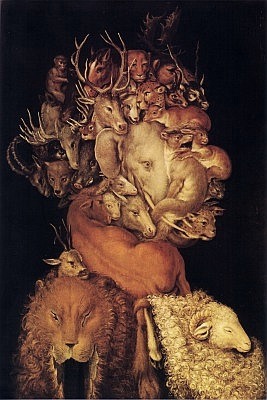
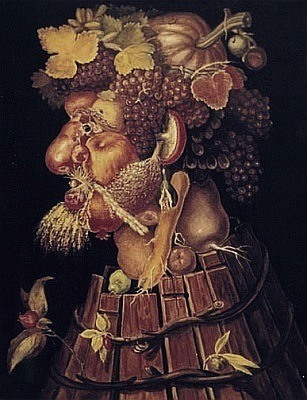
element of earth. Giuseppe Arcimboldo's
fascinating portraits of the season and its associated element lead the
imagination in all directions:
|
|